Psychodermatology Strategic Advisory
Understanding the connection between emotional well-being and skin health through a structured psychodermatology approach.
✔ International online process
✔ Confidential case review
✔ Mind–skin focused perspective
If your skin condition keeps returning, there is often a reason.
This high-level psychodermatology framework is designed to uncover the underlying factors behind recurring skin conditions.
Many dermatological issues are not purely physical. They are influenced by emotional processes, stress patterns, and behavioral responses that often remain unaddressed.
This approach focuses on identifying those hidden patterns.
Each case is evaluated through a structured process aimed at:
– Identifying recurring triggers
– Analyzing emotional and physiological interactions
– Understanding why the condition persists or returns
The goal is not simply to describe the condition, but to provide a clear, professional understanding of what may be driving it.
This is a selective, expert-level service for individuals seeking deeper insight into their skin condition.

Analytical Approach
Most skin conditions are treated as isolated symptoms.
This is one of the main reasons they keep returning.
In this approach, your condition is evaluated as a connected system — where emotional responses, behavioral patterns, and environmental factors interact over time.
By identifying these connections, it becomes possible to understand what may be driving the condition — instead of relying on repeated trial and error.
Premium Evaluation
This process is designed for individuals who feel that something is being overlooked.
If your skin condition improves temporarily but continues to return, there may be underlying mechanisms that have not been fully addressed.
By analyzing emotional responses, behavioral patterns, and internal regulation over time, this approach aims to uncover what may be driving the condition.
Each case is evaluated individually to provide a clearer and more actionable understanding.

Human-Centered Approach
Skin conditions are not purely physical. They are influenced by emotional processes, stress patterns, and the way each individual responds over time.
This approach focuses on understanding the human factors behind the condition — not just the visible symptoms.
By identifying these deeper interactions, it becomes possible to gain a clearer understanding of what may be driving the condition and how to approach it more effectively.
Begin Your Psychodermatology Advisory Process
Each case reflects a unique interaction between emotional processes, behavioral patterns, and how the skin responds over time.
Receive a structured psychodermatology-oriented review focused on the relationship between emotional well-being, stress-related factors, and skin health.
✔ Confidential submission process
✔ International online advisory structure
✔ Mind–skin focused perspective
✔ Structured evaluation approach
If your skin condition keeps returning, there is often a reason.
This framework analyzes how dermatological factors and emotional processes interact over time to uncover what may be driving your condition.
Each case is evaluated individually to identify patterns, triggers, and underlying mechanisms often missed in standard approaches.
This is not general advice — it is a focused, expert-level evaluation.
All submitted information is handled with professional discretion within a structured psychodermatology advisory framework focused on emotional and dermatological well-being.

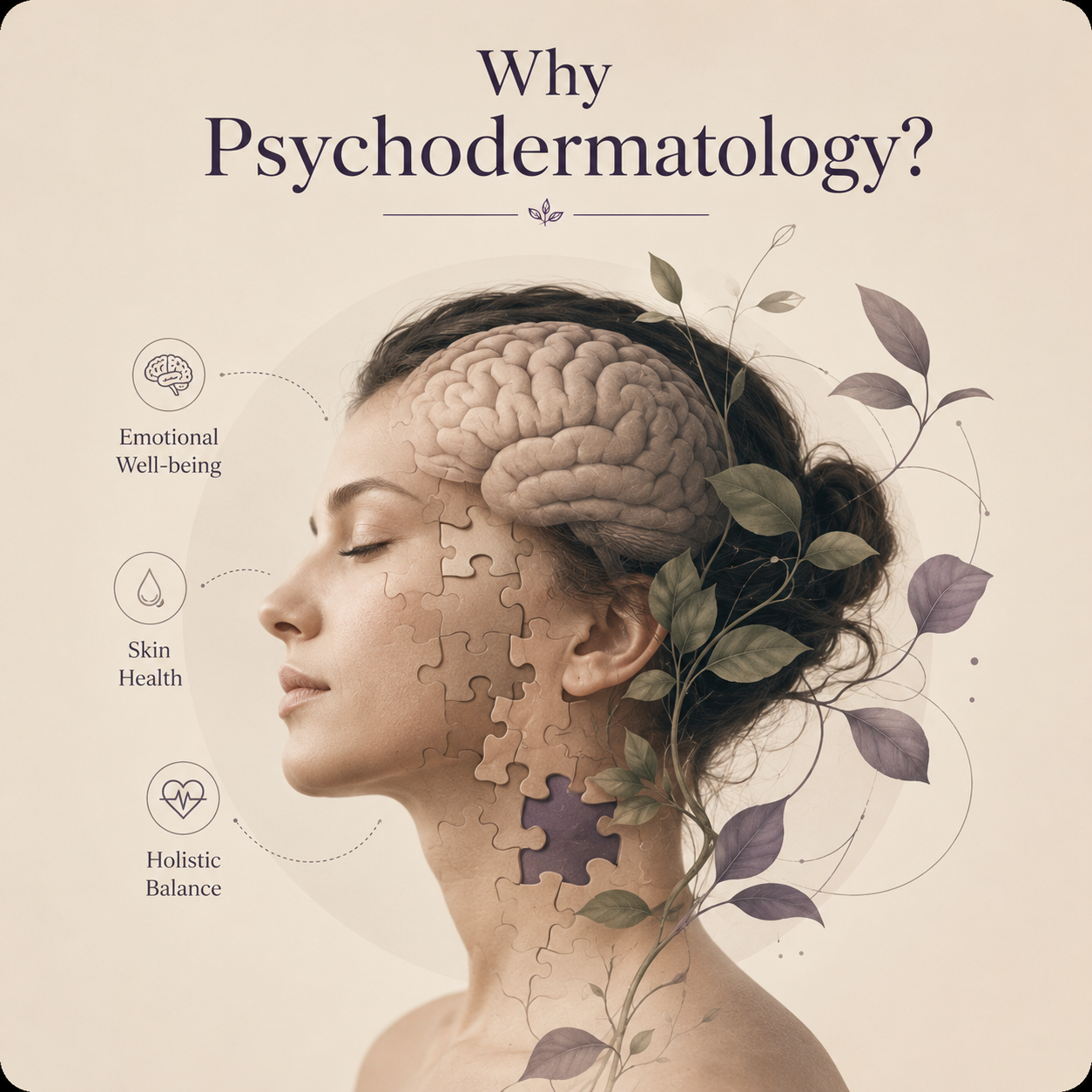
Why Psychodermatology?
Psychodermatology focuses on the relationship between emotional well-being and skin health.
Stress, anxiety, emotional distress, and psychological factors may influence various skin conditions, while visible skin problems may also affect confidence, emotional balance, and quality of life.
A more integrated perspective may help support both emotional and dermatological well-being.
Psychodermatology encourages a more integrated understanding of emotional well-being, stress responses, and skin health.
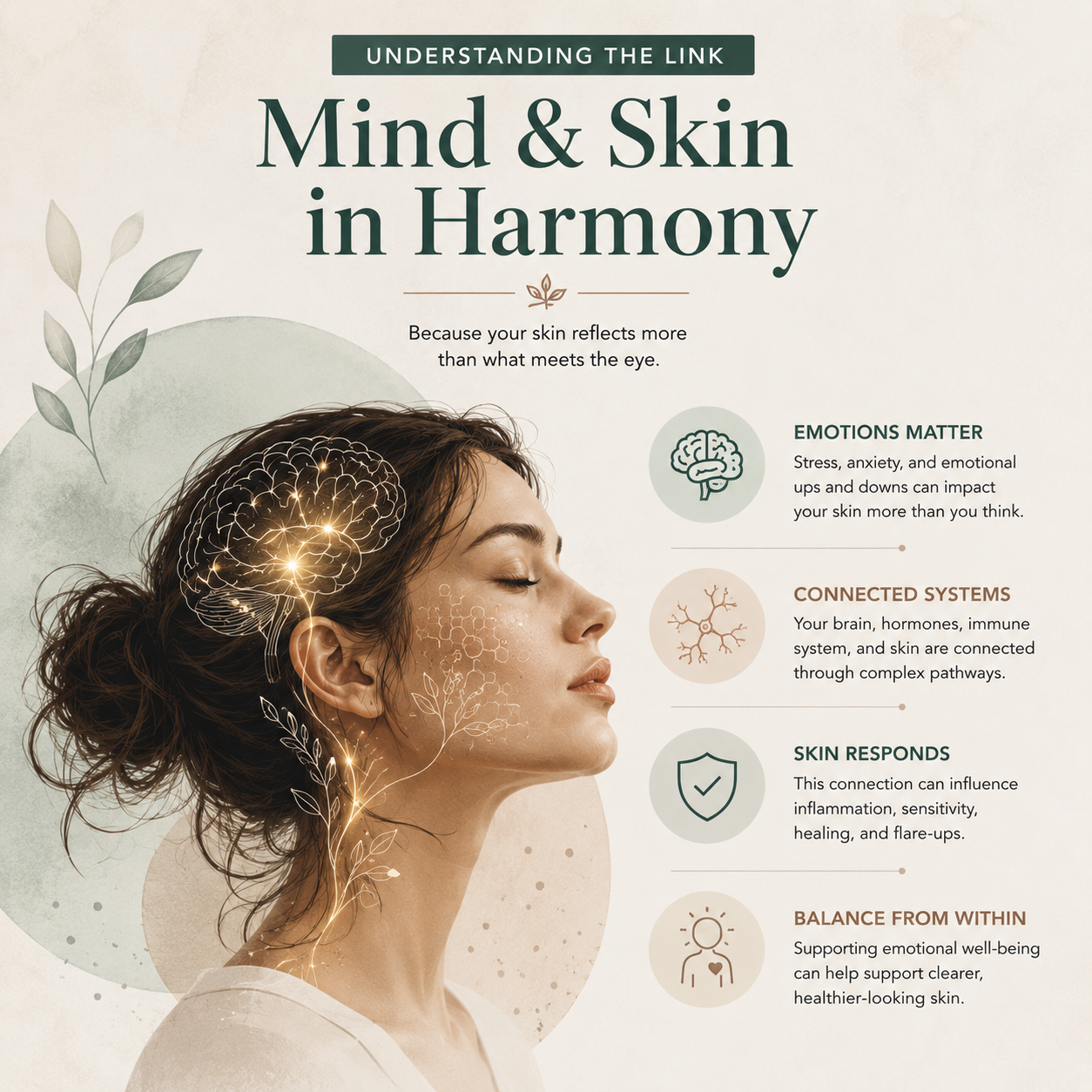
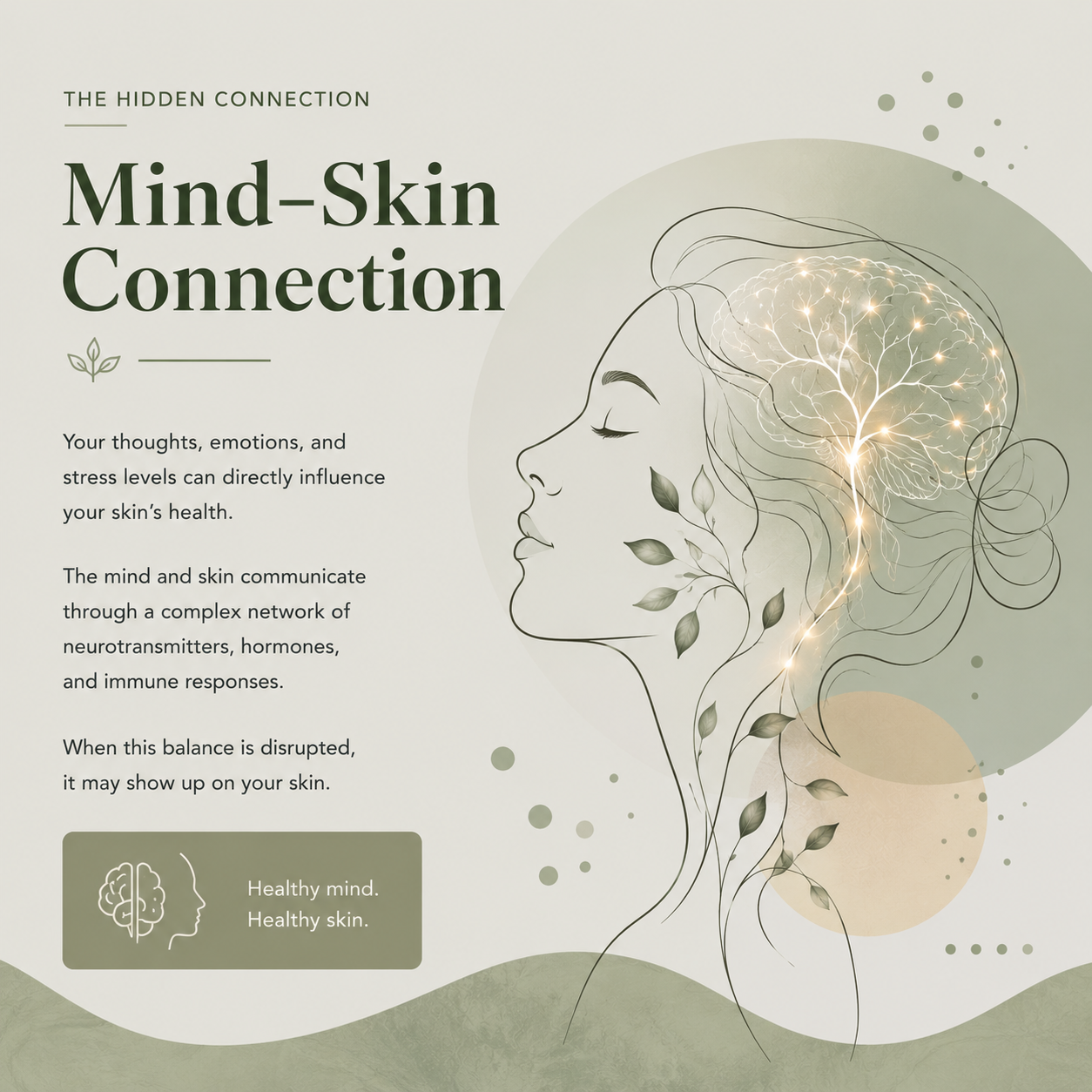
Mind–Skin Connection
Psychodermatology recognizes the continuous interaction between emotional well-being, stress responses, and skin health through neurological, hormonal, and immune system pathways.
This interaction may influence inflammation, skin sensitivity, healing processes, and stress-related flare-ups in various dermatological conditions.
Understanding the mind–skin relationship supports a more comprehensive and balanced approach to skin health.
Psychodermatology encourages a more integrated understanding of emotional well-being, stress responses, and skin health.
Holistic Perspective
,Psychodermatology approaches skin health through both emotional and dermatological understanding rather than focusing only on visible symptoms.
This broader perspective may help identify patterns, triggers, lifestyle influences, and stress-related factors connected to long-term skin well-being.
A holistic approach may also consider sleep quality, emotional resilience, stress management, and daily behavioral patterns that can affect skin balance.
Supporting both emotional well-being and skin health together may contribute to a more sustainable long-term perspective.
Psychodermatology encourages a more integrated understanding of emotional well-being, stress responses, and skin health.

PSYCHODERMATOLOGY
Your skin is not random. There is a pattern behind it.
PSİKODERMATOLOJİ
Cilt probleminizin neden tekrar ettiğini anlamak
PSICODERMATOLOGIA
Entendendo por que sua condição de pele continua retornando
Psychodermatology explores the interaction between dermatological conditions and psychological processes.
Skin conditions are influenced not only by physical factors, but also by stress responses, emotional patterns, and behavioral habits.
This interaction affects:
– When symptoms appear
– How severe they become
– Why they persist or return
Many conditions such as acne, psoriasis, eczema, and chronic irritation show patterns linked to stress, emotional states, and behavioral responses.
This is why addressing only the surface symptoms is often not enough.
Latest Psychodermatology Insights
Mind–Skin Connection
Understanding how emotional well-being and skin health continuously interact.
Stress & Skin Conditions
Exploring how stress responses may influence inflammation and skin flare-ups.
Anxiety, Depression & Skin Health
A psychodermatology perspective on emotional health and visible skin conditions.
This may be relevant for you if:
– Your condition improves, but keeps returning
– You notice flare-ups during stress
– Treatments provide only temporary results
– You feel there may be an underlying cause
– You want to understand your condition beyond surface-level explanations
If this sounds familiar, your case may benefit from structured evaluation.
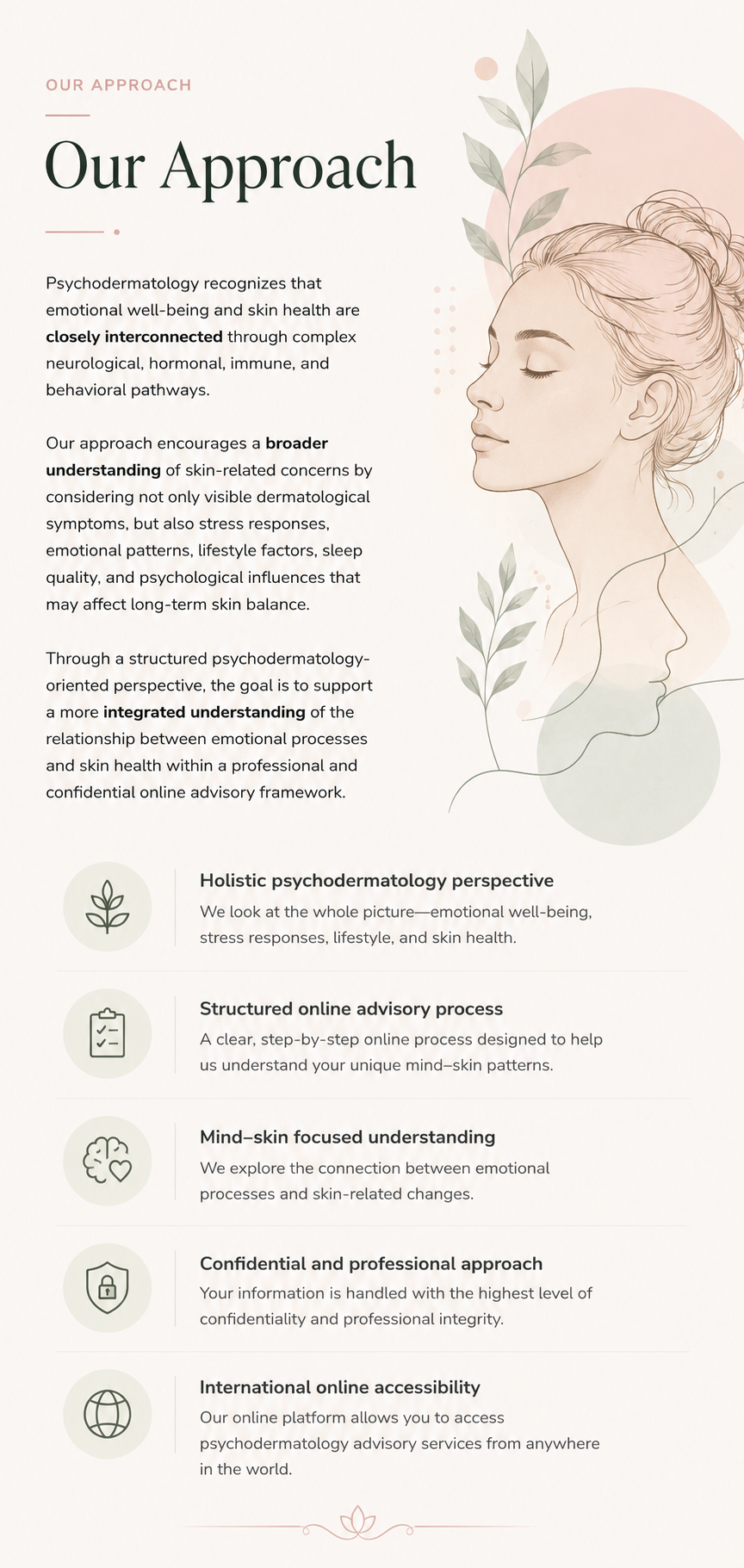
Our Approach
Psychodermatology encourages a broader understanding of skin health by recognizing the interaction between emotional well-being, stress responses, lifestyle factors, and dermatological balance.
Our approach focuses on a structured, holistic, and mind–skin oriented perspective designed to support a more comprehensive understanding of emotional and skin-related patterns.
Then altına 3 küçük madde ekle:
✔ Holistic psychodermatology perspective
✔ Structured online advisory process
✔ Confidential and professional approach
Psychodermatology recognizes that emotional well-being and skin health are closely interconnected through complex neurological, hormonal, immune, and behavioral pathways.
Our approach encourages a broader understanding of skin-related concerns by considering not only visible dermatological symptoms, but also stress responses, emotional patterns, lifestyle factors, sleep quality, and psychological influences that may affect long-term skin balance.
Through a structured psychodermatology-oriented perspective, the goal is to support a more integrated understanding of the relationship between emotional processes and skin health within a professional and confidential online advisory framework.
✔ Holistic psychodermatology perspective
✔ Structured online advisory process
✔ Mind–skin focused understanding
✔ Confidential and professional approach
✔ International online accessibility
Case Analysis Access
Not all conditions require the same level of evaluation.
Select the access level that reflects the complexity and persistence of your condition.
Each option provides a structured assessment aimed at identifying underlying mechanisms, patterns, and contributing factors that may not be visible through standard approaches.
Higher levels offer deeper analysis and greater individual focus.